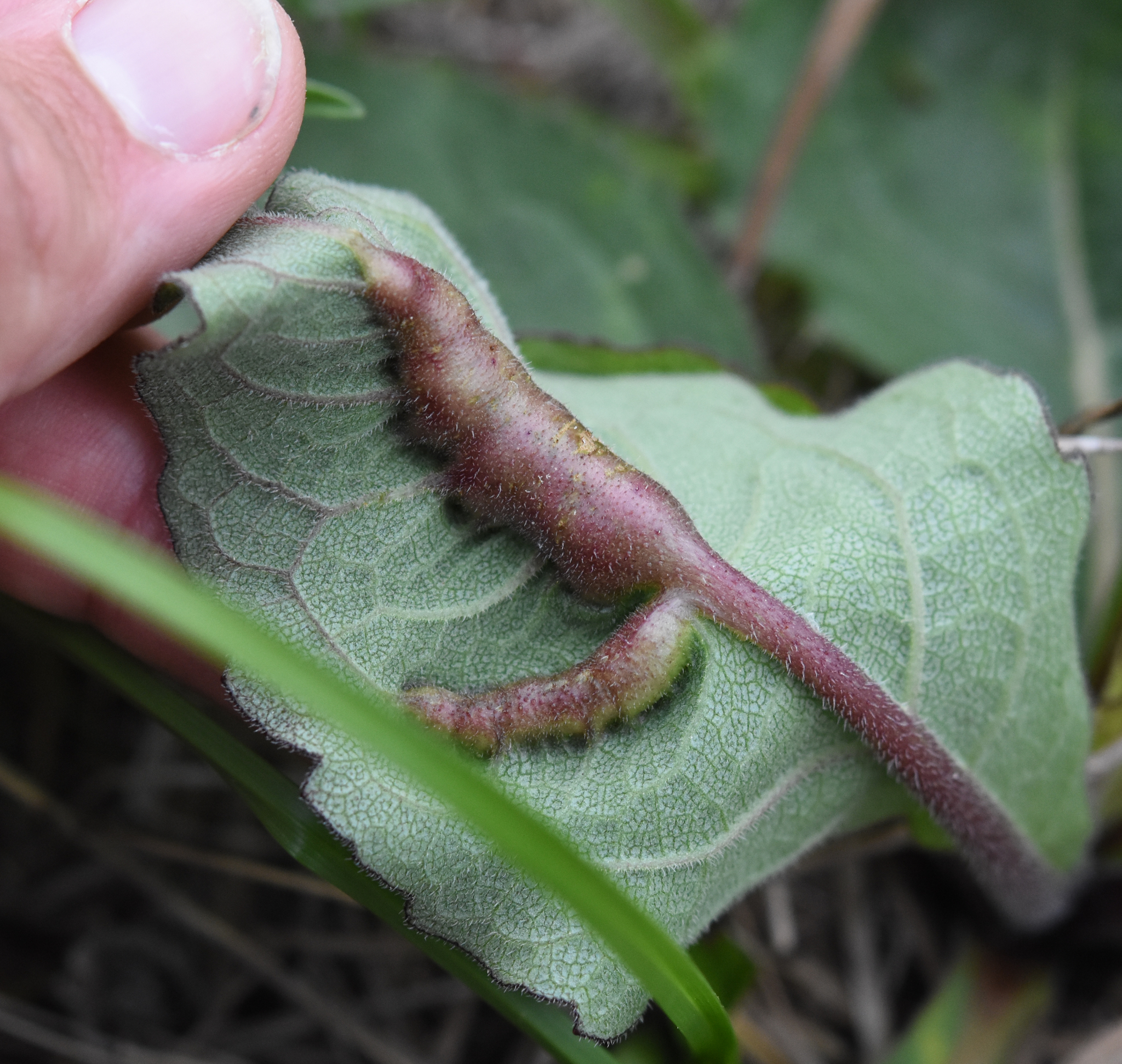
Antistrophus s-silflower-leaf-blister
The inducer of this gall is unknown or undescribed.
Gallformers Code:
View observations collected with this code on iNaturalist. Learn more about how it works and how you can help.
Hosts:
Silphium crop-silflower
/
Silphium gracile
Detachable: Integral
Color:
Texture:
Abundance:
Shape:
Season:
Alignment:
Walls:
Location: leaf midrib
Form:
Cells: polythalamous
Possible Range:
Not an occurrence map: this shows where this gall's hosts grow. In most cases the
gall has not been documented throughout this area.
Loading map...
Synonymy (1)
| Name | Type | Notes |
|---|---|---|
| Antistrophus s-integrifolium-leaf-blister | scientific | Previous name |
Further Information (1)
Characterizing Antistrophus gall wasps (Hymenoptera: Cynipoidea: Aulacideini) in crop silflower fields (Asteraceae: Heliantheae: Silphium integrifolium complex)
- Louis F. Nastasi, Ebony G. Murrell, David Van Tassel, Eric Cassetta, Andrew R. Deans
(2025)
License: All Rights Reserved
Created Feb 4, 2026 1:47 PM UTC
•
Last updated Aug 25, 2026 4:06 PM UTC